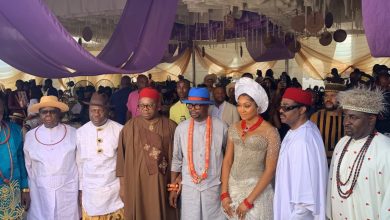
Miss Nollywood international Queen Hassana Ozohu salisu call’s out the president over the crumbling state of NHIA

Miss Nollywood international Queen Hassana Ozohu salisu call’s out the president over the crumbling state of NHIA

In a poignant and heartfelt commentary, Miss Nollywood International Queen Hassana Ozohu Salisu has brought to light a pressing issue that reverberates through Nigeria’s health sector: the dire situation confronting staff at the National Health Insurance Authority (NHIA), formerly known as the National Health Insurance Scheme (NHIS). Her open letter to President Bola Ahmed Tinubu serves as a clarion call, urging immediate attention to the injustices faced by health workers, who are grappling with economic hardship while striving to provide essential services amidst a backdrop of bureaucratic neglect.
The State of Affairs at the NHIA
During a disclosed private meeting, Queen Hassana painted a grim picture of the current circumstances surrounding the NHIA. This pivotal agency, designed to safeguard and enhance the health welfare of Nigerians, has been beset by a crisis of leadership and resource management that is throwing its employees into a spiral of poverty and discontent. The situation is particularly alarming given that the NHIA plays a central role in ensuring the health of citizens across all 36 states, thereby holding a position of critical importance within the nation’s health infrastructure.
The crisis has been compounded by stagnant wages, poor management, and a lack of accountability from senior leadership. The NHIA, which should theoretically undergo a review of its policies and salary scales every five years, has not had a salary review in over a decade—a glaring oversight that has left the agency’s dedicated staff feeling undervalued and overworked.
In echoes of Discontent
Queen Hassana voiced the frustrations of NHIA employees who, despite their tireless efforts to ensure the well-being of the populace, are met with systemic indifference from management. “How can those providing health insurance in a country as vast as Nigeria be suffering in every angle of life?” she asked, highlighting the irony of health workers experiencing economic distress while expected to deliver quality care.
The NHIA staffs, having raised their concerns through multiple protests, have increasingly found their voices suppressed by superiors who seem more concerned with maintaining the status quo than addressing legitimate grievances. The recent history of negotiations suggests a pattern of deception; promises to address wage increases are often followed by inaction, leaving employees disillusioned and distrustful of leadership.
In 2024, the NHIA staff union issued a clear ultimatum for a salary review, only for management to postpone meetings under dubious pretenses. This tactic—of continuously delaying discussions—has only served to erode trust, making it increasingly difficult for employees to believe in the sincerity of their leaders.
A Leader’s Responsibility is not seen from the respective leaders holding the four walls of the organization she said .
What Queen Hassana articulated is more than a personal distress; it is a deep-seated pain echoed across the ranks of NHIA employees. As even other ministry and retirees of some ministries are having difficulty acessing their rights to health with the NHIA. Many fear for their jobs and livelihoods, trapped in a system that perpetuates fear rather than foster dialogue. She called out the Director General (DG) of the NHIA, querying his capability and competence, “What kind of failed leader are you?” This challenge is not just to one individual but to the broader systems of leadership that have overlooked the needs of those who serve on the front lines of healthcare.
As Nigeria struggles to combat rising inflation and the growing cost of living, the need for responsive governance is paramount. President Tinubu’s administration has made strides, such as increasing the minimum wage, yet the plight of NHIA workers remains unresolved and continues to fester.
The Consequences of Leadership Failures should be applied to every failed leadership in Nigeria.
The ramifications of neglecting staff welfare within the NHIA ripple outwards, affecting the quality of care that can be provided to citizens. How can employees deliver quality health services when their own lives are marred by insecurity and economic strife? The health of a nation’s workforce is intrinsically linked to its overall healthcare outcomes; if those responsible for the health of the population are struggling to make ends meet, the system itself is at risk of collapse.
Queen Hassana went further, emphasizing that merely replacing incompetent leaders is insufficient unless the replacements are held accountable for their performance and a fast review. “An incompetent leader does not deserve to stay in office, but to be replaced,” she stated passionately. This accountability should extend to all levels of government and healthcare administration.
In light of these realities, Queen Hassana’s message is clear and urgent. She urges President Tinubu to look closely at what is happening at the NHIA, calling attention to “fishy and insensitive politics” that undermine the noble endeavor of the country’s health workers. These issues cannot be ignored any longer; they demand immediate and effective intervention.
The delaying tactics employed by the DG, are seen as attempts to deflate tensions and prolong the inevitable reckoning. It raises important questions: what is the minister of health doing to champion the cause of healthcare workers? Why is there a lack of accountability for those in leadership positions? The answers to these questions could determine the future of Nigeria’s health sector.
Queen Hassana expresses solidarity not be just as a beauty queen but as a representative voice for those who feel voiceless. She insists on the need for those in positions of privilege to stand for justice, speaking out on behalf of the dedicated health workers who risk their lives for the wellbeing of others but find themselves forsaken and forgotten.
Her plea resonates with anyone dedicated to restoring the dignity of Nigeria’s workforce and the fundamental principles of equity and justice. “We want to restore every sector of Nigeria, and what we have is our voices,” she asserts, emphasizing that collective action can catalyze change.
The narrative shared by Queen Hassana Ozohu Salisu is a sobering reminder of the fragility of our health systems when those who serve are neglected by their leaders. It is a call to action for all stakeholders in Nigeria to prioritize the welfare of health workers to foster an environment that enables them to excel.
I call out the Director General of the national Health insurance authority and the minister of health and social welfare of Nigeria. Dr. Muhammad Ali pate and Dr. kelechi ohiri
As we await a response from the President, the time is now for the administration to champion the cause of health workers, to uplift those who toil in the shadows of the health sector, and to ensure that the promise of quality healthcare is fulfilled for every Nigerian. The integrity of our healthcare system is at stake, and the implications stretch far beyond today—affecting generations to come. Let us heed this call for change with urgency and compassion.